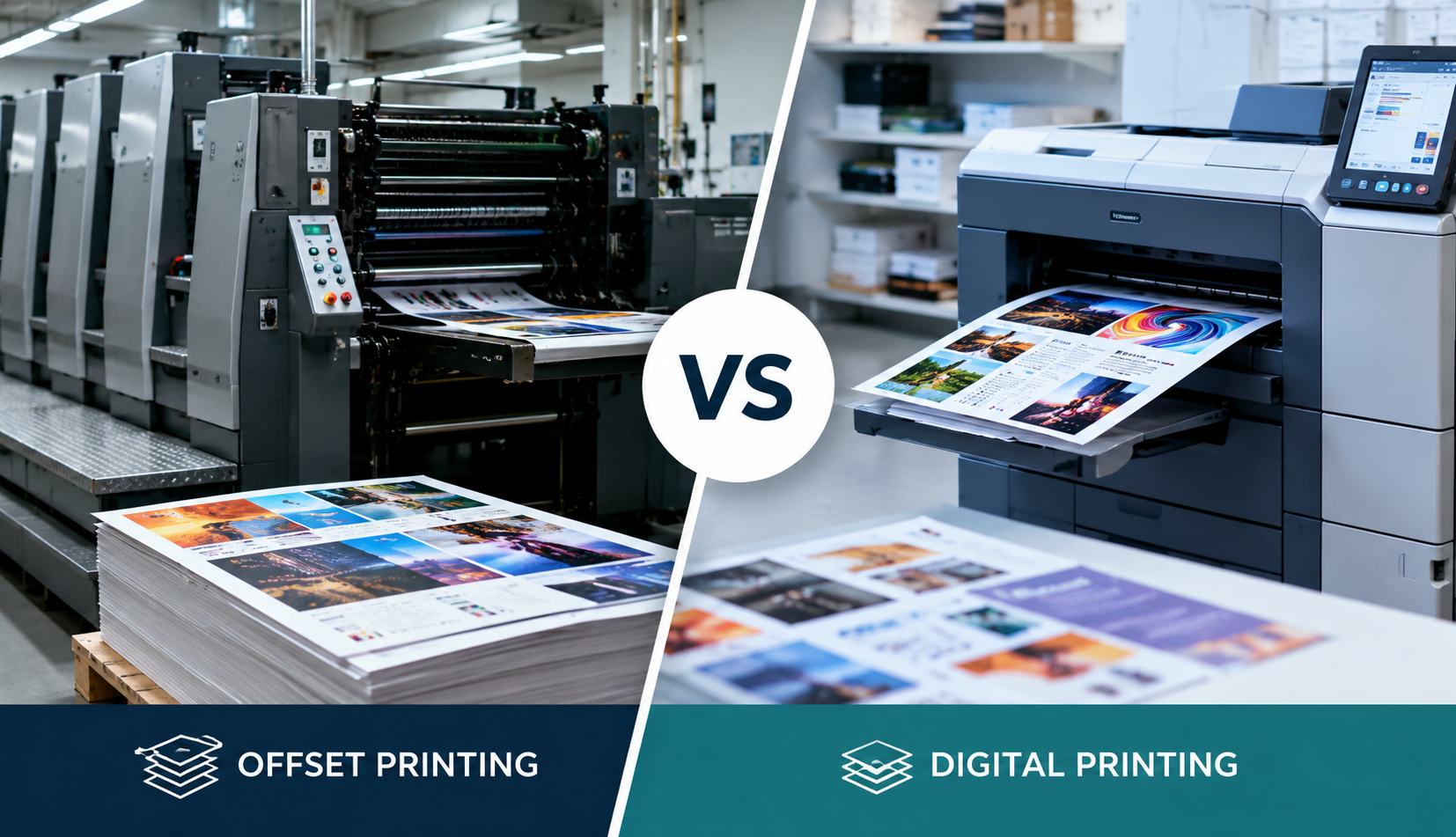

Choosing the right printing method can make a significant difference in print quality, production time, cost, and the overall presentation of your business materials. Two of the most commonly used printing methods are offset printing and digital printing. While both methods can produce professional results, each is suitable for different quantities, timelines, and project requirements.
Boom Matrix provides professional offset and digital printing services in Chennai, helping businesses choose the right printing solution based on quantity, quality, turnaround time, material, and budget.
What Is Offset Printing?
Offset printing is a traditional commercial printing method commonly used for medium and large-volume printing requirements. In this process, the printed image is transferred from a printing plate to a rubber blanket and then onto the printing surface.
Because offset printing requires initial setup and plate preparation, it is generally more suitable for larger quantities. Once production begins, it can deliver consistent print quality across a high volume of copies.
Benefits of Offset Printing
Offset printing offers several advantages for businesses with larger printing requirements:
- Consistent print quality across large quantities
- Cost-effective for high-volume printing
- Excellent colour reproduction
- Suitable for a wide range of paper types and finishes
- Professional results for corporate and marketing materials
- Suitable for specialised printing requirements
Offset printing is commonly used for catalogues, brochures, calendars, corporate folders, posters, product inserts, books, and other high-volume printed materials.
What Is Digital Printing?
Digital printing transfers a digital file directly to the printing machine without requiring traditional printing plates. This reduces setup time and makes digital printing suitable for short print runs and projects that require faster turnaround.
Digital printing is particularly useful when businesses need smaller quantities, frequent content changes, personalised information, samples, or urgent printing.
Benefits of Digital Printing
Digital printing provides several advantages for short-run and customised printing requirements:
- Faster setup and production
- Suitable for small quantities
- Cost-effective for short print runs
- Easy content changes between print jobs
- Suitable for personalised and variable information
- Ideal for samples, prototypes, and urgent requirements
Digital printing is commonly used for short-run brochures, flyers, business cards, invitations, personalised marketing materials, product samples, and promotional materials.
Offset Printing vs Digital Printing: Key Differences
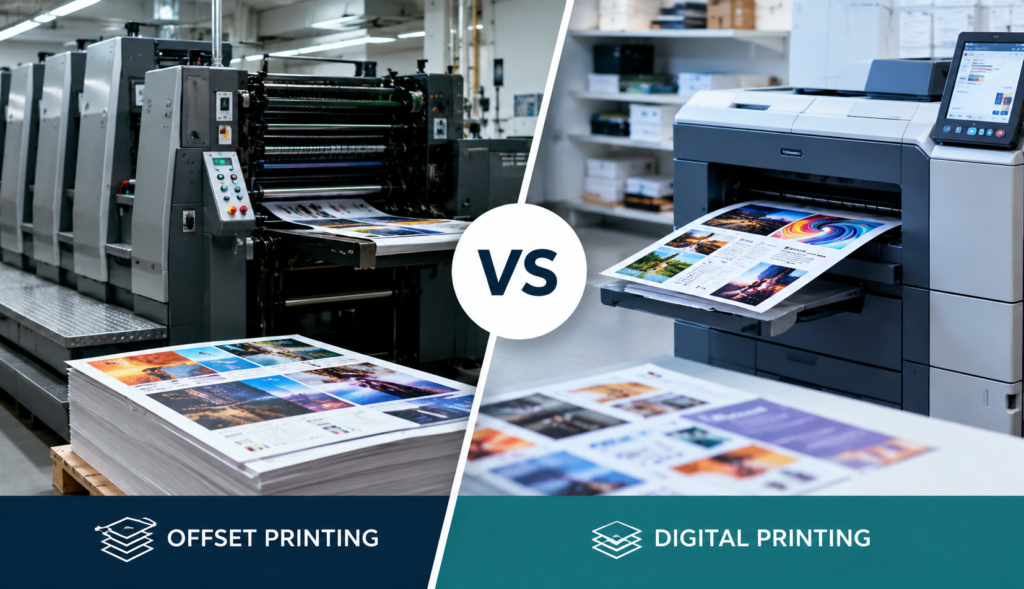
The main difference between offset and digital printing is the production process. Offset printing requires printing plates and additional setup, while digital printing transfers the artwork directly from a digital file to the printing machine.
Offset printing is generally more suitable for larger quantities where consistent quality and a lower cost per copy are important. Digital printing is often more practical for smaller quantities, faster turnaround, and personalised printing requirements.
Which Printing Method Is Best for Large Quantities?
For medium and large-volume printing requirements, offset printing is often the preferred option. Although there is an initial setup process, the cost per printed copy generally becomes more economical as the quantity increases.
Businesses that require large quantities of brochures, catalogues, calendars, posters, folders, or other corporate materials can benefit from the consistency and efficiency of offset printing.
Which Printing Method Is Best for Small Quantities?
Digital printing is generally more suitable for smaller quantities because it does not require traditional printing plates or extensive setup.
This makes digital printing a practical option for businesses that need limited quantities of brochures, flyers, business cards, invitations, samples, or promotional materials.
Which Printing Method Offers Faster Turnaround?
Digital printing usually offers faster turnaround for short print runs because the printing process can begin directly from a digital file. This makes it suitable for urgent requirements and projects with shorter deadlines.
Offset printing requires additional preparation and setup, but it becomes highly efficient when producing larger quantities.
When Should You Choose Offset Printing?
Offset printing may be the right choice when your business requires:
- A large quantity of printed materials
- Consistent colour across a long production run
- High-quality catalogues or brochures
- Special paper stocks or finishing requirements
- Lower cost per copy for high-volume production
For example, a manufacturing company printing thousands of product catalogues or a business producing a large quantity of promotional materials may benefit from offset printing.
When Should You Choose Digital Printing?
Digital printing may be the right choice when your business requires:
- A small quantity of printed materials
- Faster production and turnaround
- Frequent design or content updates
- Personalised information
- Samples before a larger production run
- Short-term promotional materials
For example, a business requiring a limited number of brochures for an event or personalised marketing materials may find digital printing more practical.
Which Printing Method Is More Cost-Effective?
The most cost-effective printing method depends primarily on the print quantity and project specifications.
For smaller quantities, digital printing is often more economical because there are fewer setup requirements. For larger quantities, offset printing can become more cost-effective because the initial setup cost is distributed across a higher number of copies.
The lowest initial price should not be the only consideration. Paper quality, finishing, colour requirements, delivery schedule, and the purpose of the printed material should also be considered when selecting a printing method.
Can Offset and Digital Printing Be Used Together?
Yes. Businesses do not always need to choose only one printing method for every project.
Digital printing can be used to produce samples or a small initial quantity before moving to offset printing for larger-scale production. A business may also use offset printing for high-volume corporate materials while using digital printing for personalised or frequently updated promotional materials.
Choosing the right printing method for each project can help improve efficiency, manage costs, and achieve the required print quality.
Choosing the Right Printing Partner
A professional printing partner should understand your requirements before recommending a printing method. Important factors to consider include:
- Required print quantity
- Paper type and thickness
- Print size
- Colour requirements
- Finishing requirements
- Delivery timeline
- Budget
- Intended use of the printed material
At Boom Matrix, we help businesses identify suitable printing solutions based on their specific project requirements.
Professional Offset and Digital Printing Services in Chennai
Whether your business needs a small quantity of marketing materials or a large commercial printing run, selecting the right printing method can help you achieve better quality, efficiency, and value.
Boom Matrix provides offset and digital printing services in Chennai for a wide range of business and promotional requirements. Our printing solutions support brochures, catalogues, folders, posters, labels, stickers, calendars, direct mailers, product tags, and other printed materials.
Need Help Choosing Between Offset and Digital Printing?
Every printing project has different requirements. The right choice depends on your quantity, timeline, material, finishing requirements, and budget.
Connect with Boom Matrix to discuss your printing requirements and identify the most suitable printing solution for your business.